
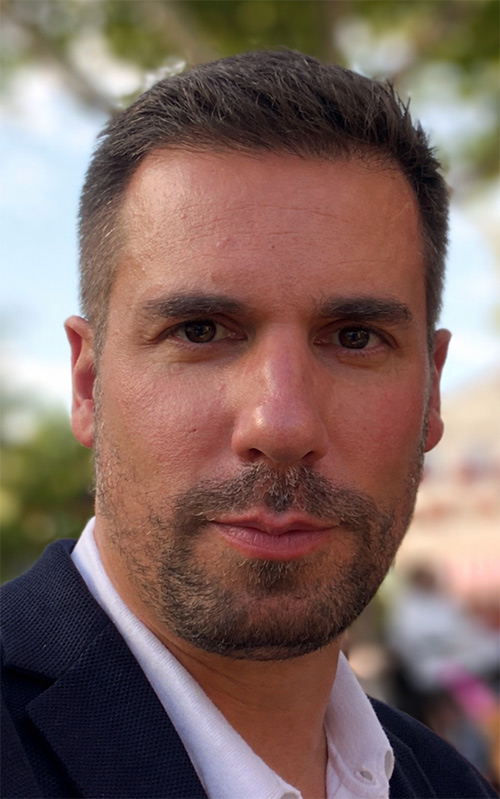
Ozren Bogdanović
Invited speaker
Ozren Bogdanović leads the Developmental Epigenomics Laboratory at the Andalusian Centre for Developmental Biology (CABD; CSIC/Universidad Pablo de Olavide/JA) in Seville, Spain, where his research focuses on the epigenetic regulation of embryonic development and epigenome reprogramming in vertebrates. He also holds an adjunct Associate Professor position at the University of New South Wales (UNSW) in Sydney, Australia. In addition, he coordinates the MSCA Doctoral Network DANIO-ReCODE, aimed at training a new generation of researchers in regenerative and developmental biology. Ozren studied at the University of Zagreb (Croatia), completed his PhD at Radboud University Nijmegen (the Netherlands), and carried out postdoctoral research at the CABD (Seville, Spain) and the University of Western Australia (Perth, Australia). In 2017, he established his research laboratory at the Garvan Institute of Medical Research / UNSW in Sydney, before relocating to Spain in 2022. At the CABD, his laboratory investigates how the epigenome contributes to vertebrate embryogenesis, evolution, and disease, with a particular emphasis on DNA methylation dynamics, non-CG methylation, and epigenetic inheritance. The lab combines cutting-edge functional genomics and genome editing approaches with the highly tractable zebrafish model system.
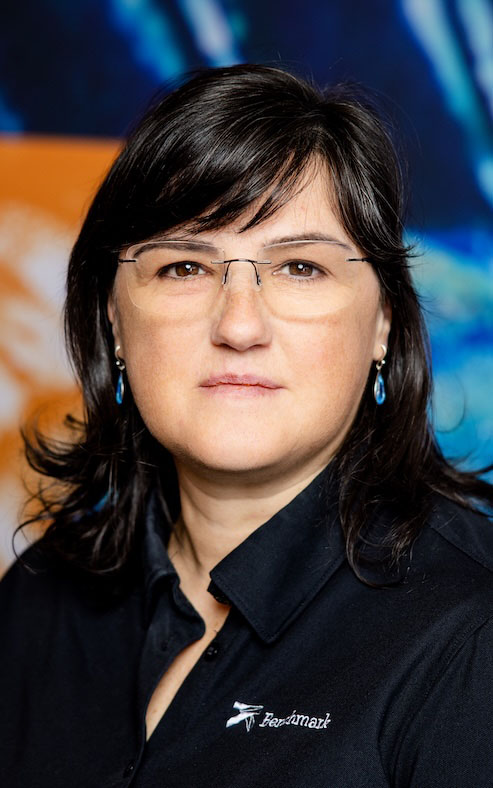
Rosana Estévez
Invited speaker
Rosana Estévez is a molecular biologist with more than ten years of experience working in applied biology and aquaculture. She has over 23 years of experience in laboratory work and research projects, from reproductive biology, cryopreservation, to quality management systems. She currently serves as Global Cryolab and Product Quality Manager in Benchmark Genetics, where she leads the development and standardization of cryopreservation protocols across production sites. Her key thematic focus is cryopreservation and its implementation at production and commercial scale, with emphasis on gamete quality, early life stage performance, and biological robustness. Her work bridges R&D and industrial operations, translating experimental data into validated, scalable processes.
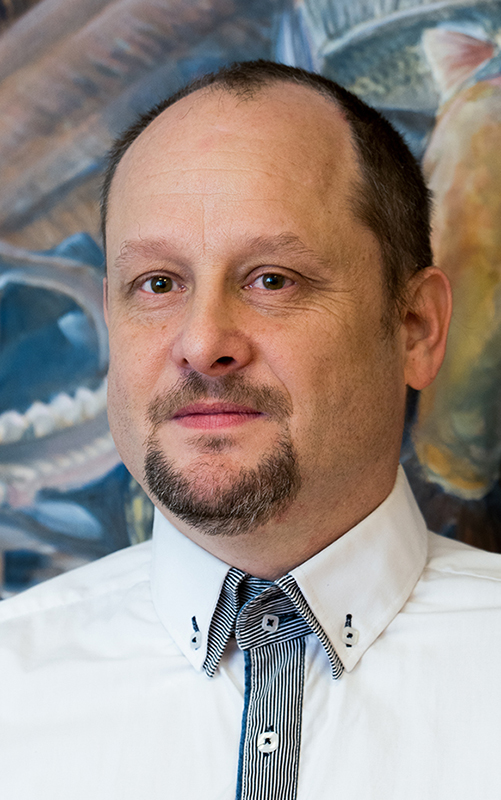
Tamás Müller
Invited speaker
Tamás Müller is Head of the Department of Fisheries Research and Development at the Institute of Aquaculture and Environmental Safety, Hungarian University of Agriculture and Life Sciences (MATE). His research focuses on induced fish reproduction, larval rearing under controlled conditions, and the artificial induction of sexual maturation, with particular emphasis on the conservation of endangered fish species. In his current work, his research group investigates the possibility of internal gamete fusion and/or internal fertilization in model externally fertilized fish species, with a focus on jawless and bony fishes. This includes examining how spermatozoa can maintain their fertilizing capacity within the ovarian environment of externally fertilized fish, and how this phenomenon can be applied to improve propagation efficiency. His research integrates evolutionary and applied approaches, using a novel, self-developed fish propagation method (sperm ovarian lavage \'93real\'94 insemination). His results contribute to advances in aquaculture technologies as well as conservation practices.